
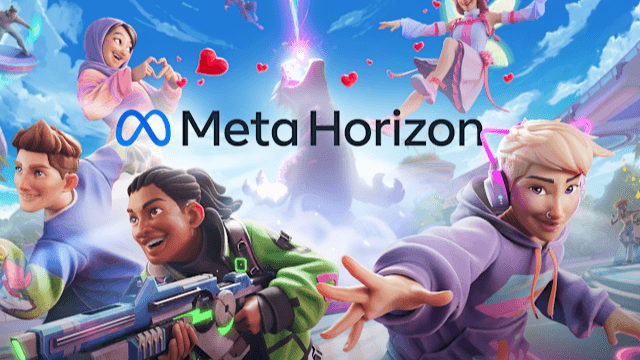
In March 2026, Meta announced it was shutting down Horizon Worlds on its Quest VR headsets. The platform that once defined Mark Zuckerberg's $46 billion bet on the future of human connection. The reason was on track to become a mobile-only app, with VR support quietly retired. Reality Labs, the division behind it all, has now lost over $73 billion since 2021. To put that in perspective, you would have to spend $1 million every single day for 200 years to lose that much money.
A few weeks later, Meta cut another 1,500 employees from Reality Labs and shut down three internal VR game studios. The pivot is no longer subtle. Meta's 2026 capital expenditure has been guided to $115 to $135 billion, almost double 2025, with nearly all of it pointed at AI infrastructure, data centers, and chips. Zuckerberg himself called 2026 "the year of advancing personal superintelligence."
Four years ago, Facebook changed its entire name to Meta. Today, the metaverse is barely mentioned on earnings calls.
The honest takeaway here is not that Zuckerberg got it wrong, although clearly he did at the scale he committed to it. The deeper lesson is about what actually happens when a hype cycle collides with reality.
The metaverse was never a problem of vision. It was a problem of timing and demand. User engagement was low, VR equipment was too expensive, the hardware was clunky, and most people genuinely had no reason to be there. The technology kept showing up to a party nobody was attending. Horizon Worlds at its peak never crossed a couple hundred thousand monthly active users. For a platform Meta wanted to be the next internet, that number is brutal.
What is fascinating is how completely the conversation has flipped. The same Silicon Valley that spent 2021 and 2022 telling us virtual property was going to be the next great asset class, that we would all be working in VR, that crypto-backed digital land was the future, has now collectively pretended none of that happened. Crypto and metaverse were going to change everything. Then they did not. Now AI is going to change everything.
Maybe AI will. There is real signal here that was never present in the metaverse hype, real revenue, real enterprise adoption, real productivity gains people can measure. But the lesson worth carrying forward is that confidence is not the same as correctness, and the bigger the consensus around a technology being inevitable, the more carefully you should test the assumptions underneath.
For founders, the takeaway is sharper. Be very, very careful about building your company on top of someone else's hype cycle. The number of startups that quietly died with the metaverse, the GameFi projects, the virtual real estate platforms, the NFT-backed avatar companies, runs into the thousands. Their vision was downstream of Meta's. When Meta moved, they had nothing left.
The companies that survive these cycles are the ones building real value, not riding waves. Solving real problems for real people who are willing to pay real money. That has not changed and will not change, no matter what label gets bolted onto the next hype cycle.
The metaverse failed quietly. AI is succeeding loudly. The real test for both is the same. Does it actually solve a problem worth solving for a customer who has no patience for our excitement?
Back to building.